
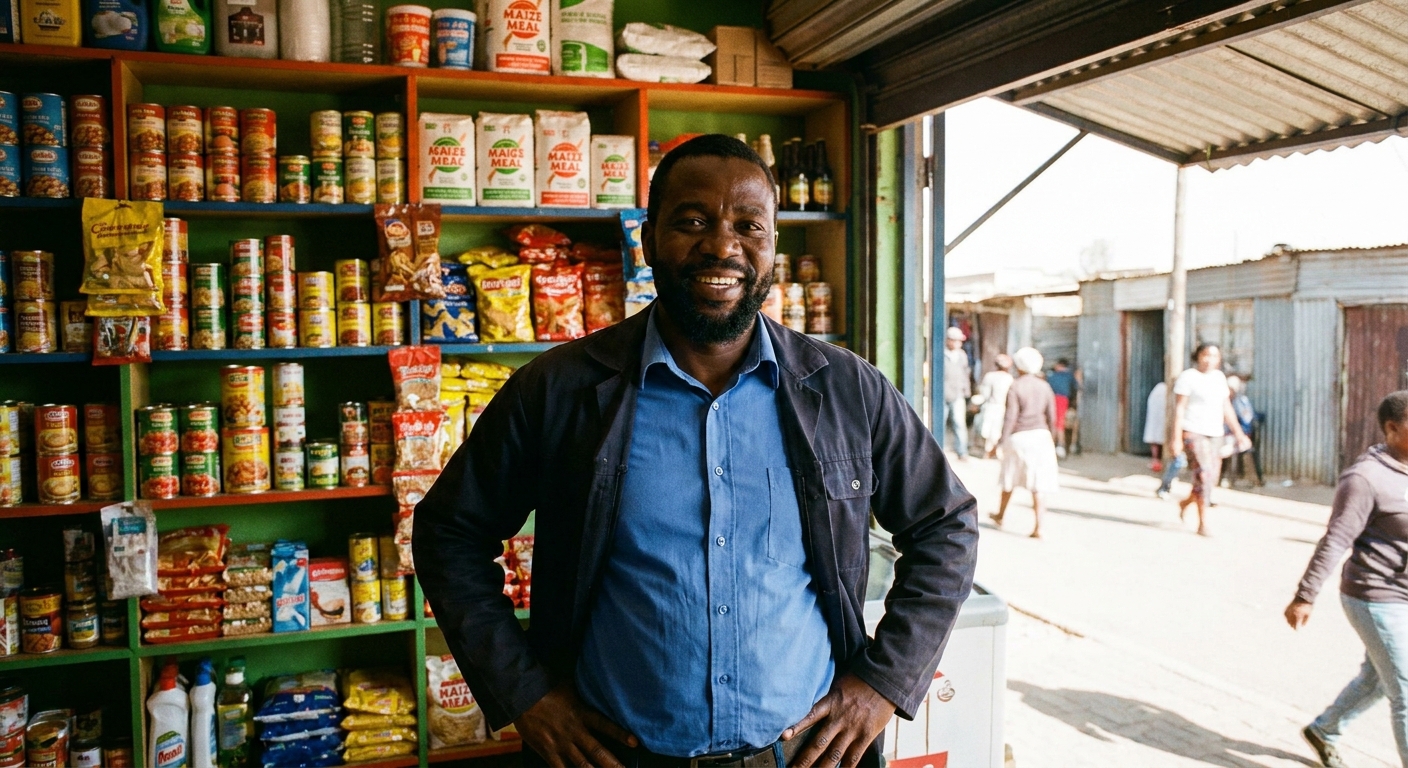
Soweto is one of the most entrepreneurial places in the country. From the spaza shops of Orlando and Diepkloof to the traders around Maponya Mall, the taxi operators, and the side-businesses run out of homes in Pimville and Meadowlands — this is an economy built by people who work for themselves. The problem? Most traditional lenders are built for people with a payslip, and that leaves a lot of Soweto out. Fido is built differently.
The payslip problem — and how Fido gets around it
If you run a spaza, sell at a market, drive a taxi, or hustle a few income streams together, you probably can't produce the formal payslip a bank wants. That doesn't mean you can't afford a loan — it means the old way of checking was never designed for you. Fido assesses affordability from your bank statement: the money flowing through your account, not a salary slip. If your income is real and regular, even if it's not a fixed salary, you can be assessed fairly. Here's how borrowing without a payslip works.
Money for the things that keep a small business moving
In Soweto, a short-term loan is often a working-business tool: restocking the spaza before month-end, covering a slow week, grabbing a deal on stock, or handling a family expense without dipping into the till. Fido offers R500 to R8,000 over 30 to 90 days — sized for exactly these short, specific needs rather than long-term debt.
No branch trek, no card left behind
Two things matter here. First, you apply entirely on the Fido app — no trip out of the township to a lender's branch, no queue, no closing the shop for an afternoon. Second, Fido is a registered, regulated lender (NCRCP16693), which means — unlike an informal mashonisa — it will never hold your bank card, PIN or ID as security, and your costs are capped and shown upfront. If you've ever weighed up a mashonisa, it's worth understanding the difference.
The cost, and the bonus
Fido's pricing stays within the National Credit Act's short-term caps: up to 5% per month interest, an initiation fee of up to R165, and a monthly service fee of up to R69 — shown in full before you accept. Approval depends on an affordability assessment, so it's never automatic. And because Fido reports to a credit bureau, every repayment you make on time builds your credit record — turning a quick loan into something that strengthens your standing for bigger things later.
How to apply from Soweto
- Download the Fido app (Google Play or App Store).
- Register with your SA ID and verify yourself in the app.
- Connect your bank account or upload a statement — no payslip.
- See your offer, with the full cost, and accept if it works.
- The money goes straight to your bank account.
You can check Fido's registration on the NCR's public register at ncr.org.za. Whether you're building a business in Orlando or covering a gap in Meadowlands, borrow only what you can comfortably repay, and see your personal credit options when you're ready.
Loans elsewhere in Gauteng
Fido lends across the province. See our local guides to online loans in Johannesburg, Pretoria and Ekurhuleni. And if you earn behind the wheel, see loans for Uber, Bolt and delivery drivers.
Yes. Fido offers online loans to Soweto residents. You apply through the Fido app — no paperwork or branch visits required.
Yes. Fido provides personal credit that spaza shop owners and informal traders can use for stock, repairs, or emergencies. No payslip is needed.
Fido offers loans starting from R500. The amount you qualify for depends on your bank account activity and repayment history.
Yes. Fido is registered with the National Credit Regulator (NCR) and complies fully with the National Credit Act (NCA). You can verify our NCR registration number on the NCR website.