
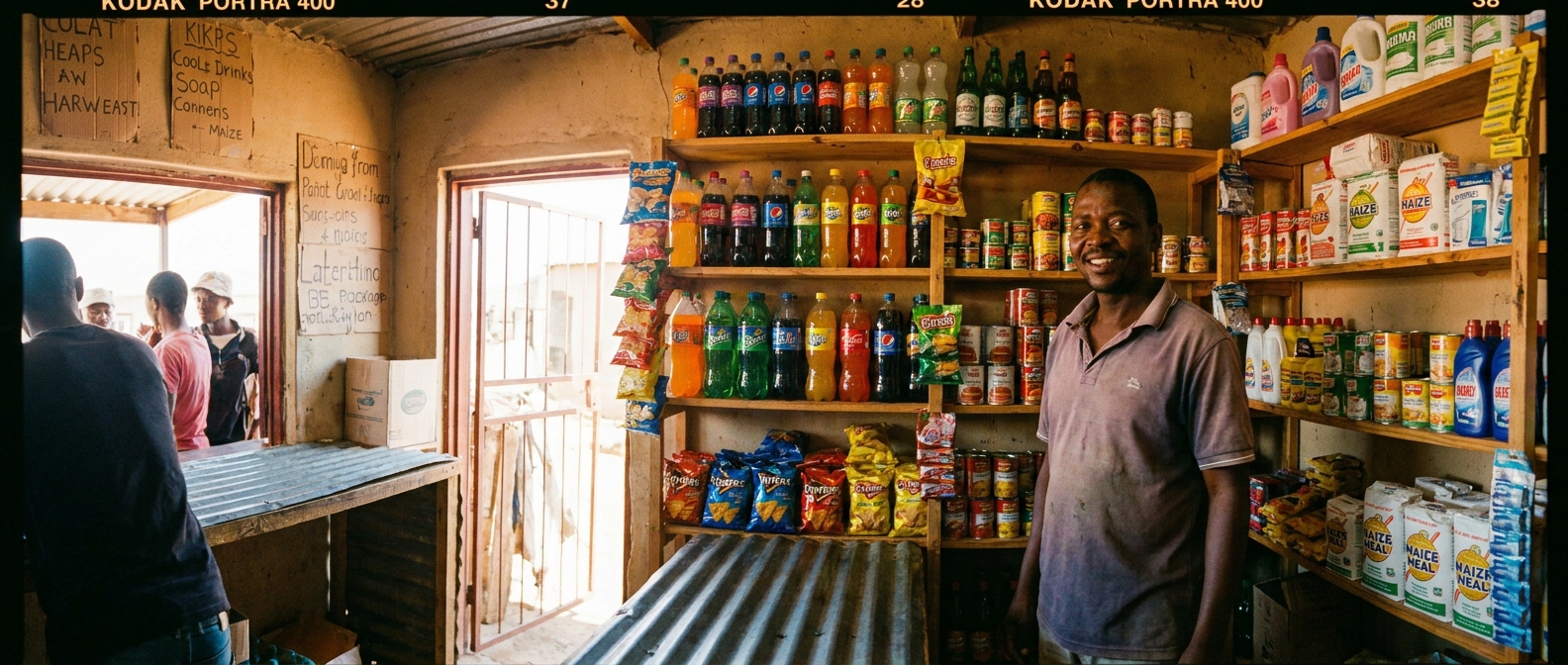
Small Loans, Big Moves
South African spaza shops and micro-businesses are some of the most resilient enterprises on earth. They survive load shedding, rising wholesale prices, competition from big chains, and economic uncertainty — often with little more than a small space, a loyal customer base, and determination.
But surviving and growing are different things. And increasingly, township entrepreneurs are using small business loans — from R500 to R8,000 — to cross the line from surviving to actually building something.
Here are five ways they're doing it.
1. Buying Stock in Bulk at Better Prices
Every spaza owner knows that buying in bigger quantities gets you a better price per unit. The problem is cash: you might only have enough to buy a single crate of cool drinks when you know buying three would save you 12% per can.
With a stock loan, you can buy in bulk when prices are right — especially before month-end, holidays, or peak seasons like Easter and Christmas. The savings on bulk pricing often more than cover the cost of the loan.
2. Adding a Cold Drink Fridge
Ask any experienced spaza owner: a working cold drink fridge doubles your cool drink sales. Customers will walk past a warm fridge. They'll pay for cold.
A second-hand upright fridge in good condition can be found for R2,000–R4,000 in South Africa. That's within Fido's loan range. Shop owners who've made this investment report significant increases in daily turnover — often recovering the loan within the first month through increased sales alone.
3. Expanding Into Airtime and Data Bundles
Airtime and data selling requires capital upfront — you buy vouchers or recharge stock in advance, then sell them at a margin. The barrier isn't skill; it's the float money needed to stock up.
A small business loan gives you the float to start selling airtime and data from your existing shop location. Once you're established, this becomes a high-turnover product with a reliable margin and repeat customers.
4. Surviving and Capitalising on Month-End
Month-end in South African townships is a completely different trading environment. The last few days of the month and the first few days of the new month see a dramatic spike in spending as salaries and grants land.
The problem: month-end is also when your stock gets depleted fastest. Shops that are well-stocked at month-end capture significantly more revenue than those that run out by day 2 or 3.
A well-timed stock loan — applied for a few days before month-end, repaid over the following weeks as sales roll in — lets you be the shop that's full when everyone else is empty.
5. Opening Earlier or Extending Hours
Some township entrepreneurs use business finance not just for stock, but for the working capital that lets them operate more consistently. Having a cash buffer means you're not closing early because you can't afford to buy the next day's bread, or opening late because you're waiting for a payment to clear.
The shops that stay open longer, open earlier, and are consistently stocked win the customer loyalty game in the long run.
How to Apply for a Stock Loan With Fido
Fido's business credit is available to any South African with an SA ID and a smartphone. You apply through the app, get a decision in minutes, and money arrives the same day if approved.
If you're ready to stop surviving and start growing, apply for your stock loan today.
Yes. Fido offers personal credit that spaza shop owners can use for stock, repairs, or equipment. Apply through the Fido app — no formal business registration required.
Common uses include buying bulk stock, repairing or upgrading your shop, purchasing a fridge or display equipment, and covering cash flow gaps during slow periods.
You need a valid South African ID and an active bank account showing regular income or revenue. Fido does not require a payslip or formal business documents.
If the investment generates more revenue than the cost of the loan, it is worth considering. Calculate your expected return on the investment (e.g. increased stock variety) before borrowing.