
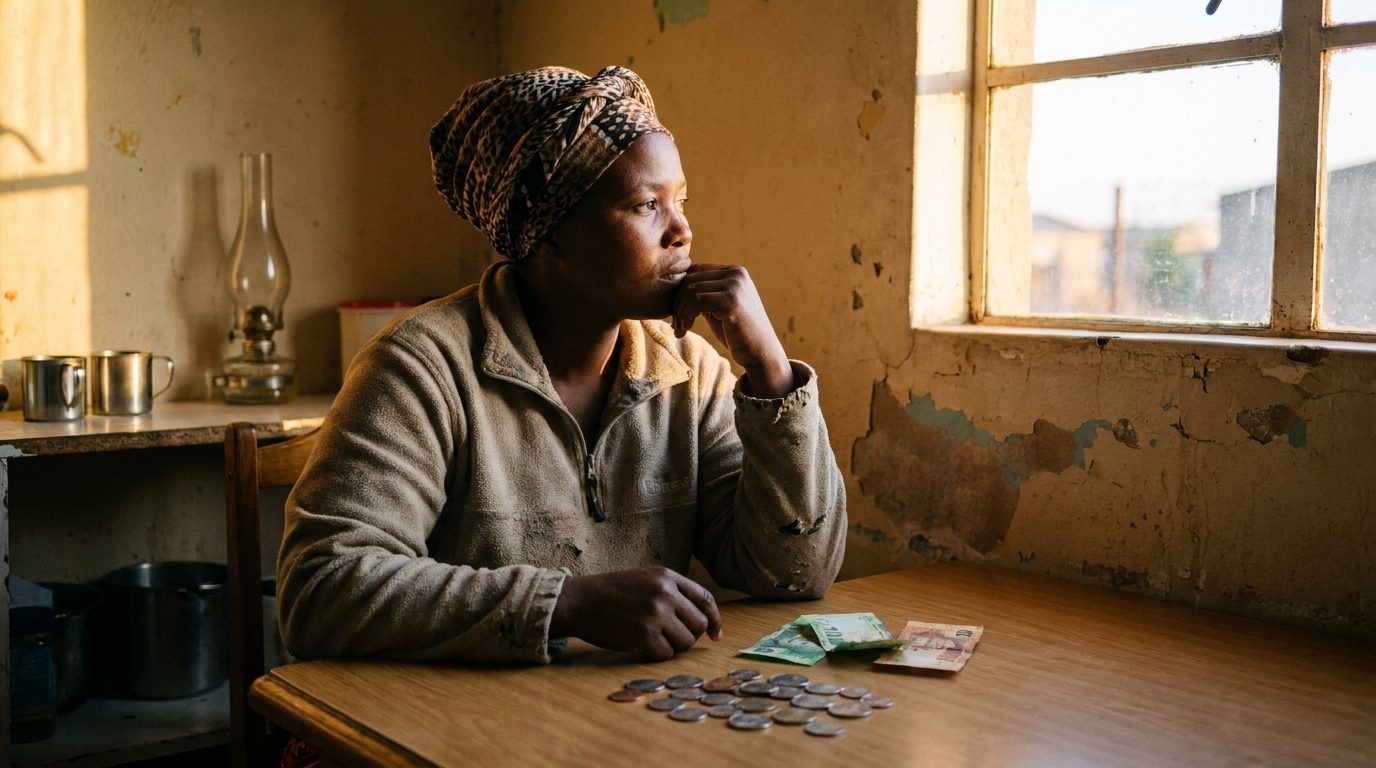
It is the 20th of the month. Payday is still ten days away. The fridge is getting empty, the taxi fare is running low, and there is a school notice sitting on the kitchen table asking for a contribution you have not budgeted for.
This is a situation most South African workers know too well — especially those who live paycheck to paycheck, earn irregular income, or cover multiple family members on a single income. The gap between what you earn and what life costs is real, and it shows up before month-end every single time.
This guide is not about lectures on saving more. It is about practical strategies for getting through the tight stretch at the end of the month without falling into a debt trap.
Why South Africans Run Out of Money Before Payday
Before you can fix a problem, it helps to name it honestly. There are several structural reasons why South African workers — even those earning a regular income — find themselves short before month-end:
The cost of living keeps rising
Food, electricity, transport, rent, and school expenses have become more expensive over the years, often increasing faster than salaries. Even households with stable incomes can find that the same amount of money simply does not stretch as far as it used to.
Many people support more than just themselves
In South Africa, it is common for one income to support an entire household or to help extended family members as well. Financial responsibilities rarely stop at your own expenses, and unexpected requests for assistance can put pressure on an already tight budget.
Irregular income makes planning difficult
Freelancers, gig workers, small business owners, and casual workers often do not earn the same amount every month. When income fluctuates, budgeting becomes harder and there is less room to prepare for unexpected costs.
Emergencies do not wait for payday
A sick child, a car repair, a funeral contribution, or an urgent school expense can throw off an entire month's budget. These are not luxuries or poor financial decisions. They are part of everyday life, and they often arrive without warning.
Debt repayments eat into monthly income
Existing loans, store accounts, subscriptions, and other recurring payments reduce the amount of money available for daily living expenses. Even manageable debt can make the last week of the month feel much tighter.
Small expenses add up quickly
A few takeaway meals, extra taxi trips, convenience purchases, or subscriptions you barely use may not seem significant individually. Together, however, they can quietly drain hundreds of rand each month.
There is little room for savings
When most of your income goes toward essentials, building an emergency fund can feel impossible. Without savings to absorb unexpected costs, even a small financial shock can leave you scrambling before payday.
Sometimes it is not a budgeting problem
This is perhaps the most important point. Running out of money before payday does not always mean you are irresponsible or bad with money. Sometimes the reality is simply that your income is stretched across too many obligations and the cost of living has outpaced what you earn.
Understanding the reasons behind the problem is important because it shifts the conversation away from blame and toward practical solutions. The goal is not perfection. It is finding ways to make the last few days before payday a little less stressful and a lot more manageable.
Rising Cost of Living With Stagnant Wages
Food, transport, electricity, and rent have all increased significantly over the past few years. Wages, especially in the informal and domestic sectors, have not kept pace. The result is a widening gap between what you earn and what the basics cost.
Front-Loaded Expenses
Many of life’s biggest costs fall at the beginning of the month: rent, insurance premiums, school fees, debit orders. By the time you have paid your essential obligations, the buffer for mid-month and end-of-month expenses is often thin or gone.
Unpredictable Extras
A child’s illness, a transport breakdown, an unexpected funeral — these are not budgeted for because they cannot be predicted. In a household with tight margins, even one unexpected cost can tip the balance.
Borrowing to Bridge, Then Borrowing Again
Many workers use credit to get through the month — but if the credit terms are expensive (high interest, rollover fees), each repayment leaves less for the next month. The cycle becomes self-sustaining.
7 Practical Ways to Stretch Your Money to Payday
1. Do a Hard Audit of What Goes Out Every Month
Before you can manage your money better, you need to see where it actually goes. For one week, track every rand you spend — taxi fares, airtime, grocery runs, take-out. Most people find one or two categories where they are spending more than they realised.
You do not need an app or a spreadsheet. A notes page on your phone or a small notebook works fine.
2. Prioritise Shelter and Transport Above Everything Else
If money is very tight, pay rent first and transport second. These two things keep you housed and employed, which is the foundation everything else rests on. Food, while critical, can often be stretched (see below). But losing your home or your job because you could not pay rent or get to work creates problems that take months to recover from.
3. Reduce Your Grocery Spend Without Eating Less
This does not mean going hungry. It means being more strategic:
Buy staple foods that go further
Foods such as maize meal, rice, beans, lentils, potatoes, and oats are often more affordable per meal than processed or convenience foods. Planning meals around staples can reduce costs without reducing how much you eat.
Cook at home more often
Buying lunch every day or ordering takeaways can quietly drain your budget. Preparing meals at home, even a few extra times per week, can make a noticeable difference by the end of the month.
Shop with a list and stick to it
Walking into a supermarket without a plan makes impulse purchases much more likely. Decide what you need before you leave home and try to avoid shopping when you are hungry, as this often leads to spending more than intended.
Compare prices between stores
Not all supermarkets price products the same way. Checking promotions, buying store brands, or comparing prices between nearby shops can help you stretch your grocery budget further.
Buy only what you will use
Food waste is expensive. Buying large quantities only makes sense if you will actually use them before they spoil. Sometimes buying a smaller amount is the more economical choice.
Stretch ingredients across multiple meals
Cook larger portions and use leftovers creatively. A pot of stew, curry, or beans can provide several meals and reduce the temptation to spend money on convenience food later in the week.
Focus on nutrition, not just price
Saving money should not mean sacrificing your health. Try to choose foods that are filling, nutritious, and affordable rather than relying solely on the cheapest options available.
The goal is not to eat less. It is to make your grocery budget work harder for you so that the money you have lasts until payday without adding unnecessary stress.
4. Cut Airtime and Data by 50% for Two Weeks
For most people, airtime and data are the easiest expenses to trim temporarily. WhatsApp on WiFi, reduced social media scrolling, and combining data bundles can save R50–R200 in two weeks without changing your life significantly.
5. Ask for Prepayment or Advance Work
If you clean houses, do gardening, or provide any regular service, there is nothing wrong with asking your employer or client if they can prepay the next session when you are in a tight month. Most long-term employers who trust you will accommodate this. It is not begging — it is managing your cash flow.
6. Sell Something You Do Not Need
Facebook Marketplace, Gumtree, and WhatsApp community groups are full of people buying second-hand items. Old clothes, a spare appliance, furniture you do not use, tools you have not touched in months — R200–R800 from one or two items can fill a serious income gap.
7. Use a Short-Term Loan for True Emergencies Only
If you have an expense that cannot wait — rent arrears, school fees, a medical bill, or transport to get to work — a short-term loan from a registered lender is a legitimate tool.
The key word is “emergency.” A short-term loan used to cover a genuine income gap is different from one used to fund weekend spending. Know the difference before you apply.
How to Use a Short-Term Loan to Bridge the Gap Without Getting Trapped
Many South Africans have been burned by expensive credit — by mashonisas (informal loan sharks), by payday lenders with hidden fees, or by rollovers that trap you in a cycle of debt.
Here is how to borrow responsibly when you genuinely need to:
Rule 1: Know exactly how much you need. Do not borrow R3,000 when R1,200 covers the actual emergency. The smaller the loan, the lower the cost and the easier to repay.
Rule 2: Know your repayment date before you borrow. Confirm when your next income arrives, and match the loan repayment to that date. If the dates do not line up, look for a lender who can adjust.
Rule 3: Use only NCR-registered lenders. The National Credit Regulator (NCR) keeps a register of all legal credit providers in South Africa. Registered lenders are legally required to disclose all fees upfront, cap interest rates, and follow the National Credit Act. Lenders who are not registered have none of these obligations.
Rule 4: Read the repayment summary before you sign. You should see a single, clear number: the total amount you will repay, including all fees. If a lender cannot or will not show you this upfront, walk away.
Fido is a registered NCR credit provider (NCRCP16693). Every loan offer shows you the total repayment amount before you accept. There are no surprise charges and no pressure to borrow more than you need.
Building a Thin Emergency Buffer Over Time
Once you are through the tight stretch, consider building a small emergency reserve — even a very small one. This is not about saving aggressively. It is about creating a buffer that reduces how often you need to borrow.
Start with an amount that feels manageable
Your emergency fund does not need to start at thousands of rand. Even setting aside R20, R50, or R100 at a time is a meaningful first step. The goal is not to save a huge amount overnight. The goal is to create the habit of keeping something aside for difficult days.
Save before you spend
If possible, move your savings aside as soon as your income arrives. Waiting to see what is left at the end of the month often means there is nothing left to save. Treat your emergency fund as an essential expense, not an afterthought.
Keep the money separate
An emergency fund works best when it is not mixed with your everyday spending money. Keeping it in a separate savings account or wallet makes it less tempting to dip into for non-emergencies.
Build slowly and consistently
There will be months when you can save more and months when you can save nothing at all. That is normal. What matters is returning to the habit whenever you can. Small, regular contributions often add up faster than people expect.
Use it only for genuine emergencies
An emergency fund is there for unexpected expenses: a medical bill, urgent transport repairs, a temporary loss of income, or another unavoidable cost. It is not meant for impulse purchases or planned expenses.
Think of it as buying peace of mind
The first R500 you save can sometimes feel more valuable than the next R5,000 because it changes your relationship with money. Knowing you have a small cushion makes financial setbacks less frightening and reduces the need to borrow every time something goes wrong.
Borrow less as your buffer grows
The purpose of an emergency fund is not to make you rich. It is to make you more resilient. Every rand you save is a rand you may not need to borrow later, and every crisis you can handle yourself is one less source of financial stress.
A thin emergency buffer will not solve every problem. But over time, it can create something incredibly valuable: the ability to face life's surprises without immediately falling into debt.
Even a R500 buffer changes your options significantly when an unexpected expense hits. It may mean the difference between taking a loan and not needing one.
When to Ask for Help
There is no shame in reaching out when things get very tight. South Africa has several resources that can help:
Speak to your creditors early
If you know you will struggle to make a repayment, do not wait until after you have missed it. Many lenders are more willing to discuss options when you contact them before the due date rather than after the account has fallen behind.
Reach out to family or trusted friends
Borrowing from loved ones is not always ideal, but in some situations it can be a safer option than taking on expensive debt. Be honest about your circumstances and, if you borrow money, agree on a repayment plan you can realistically keep.
Use community support networks
Churches, community organisations, stokvels, and local support groups often help members facing temporary financial hardship. If you belong to one of these networks, do not be afraid to ask what support is available.
Seek professional debt advice if debt is becoming unmanageable
If you are constantly borrowing to get through the month, missing repayments, or feeling overwhelmed by debt, it may be time to speak to a qualified debt counsellor or financial adviser. Getting advice early can prevent a difficult situation from becoming a crisis.
Ask for help before the situation becomes urgent
Many people wait until they have exhausted every option before reaching out. But the earlier you ask for help, the more choices you usually have. Financial difficulties are easier to manage when they are addressed early rather than ignored.
Remember that financial stress is common
Living paycheck to paycheck is not a personal failure. Millions of South Africans face the same challenge every month as they balance rising costs, family responsibilities, and uncertain incomes. Asking for help is not a sign of weakness. It is often one of the smartest financial decisions you can make.
The goal is not to struggle alone until payday arrives. It is to use the resources, people, and support systems around you to get through difficult periods safely and with as little long-term financial damage as possible.
Get to Payday Without the Stress
Running out of money before the end of the month does not make you bad with money. It makes you human, living in a country where the cost of living keeps climbing and wages do not always follow.
If you need a bridge to get through — for rent, school fees, transport, or a medical bill — Fido is here. No payslip required, no branch visit, cash in minutes.
Apply on the Fido app — get your personalised offer in under 5 minutes.
The most common reasons are: front-loaded fixed expenses at the start of the month, rising living costs outpacing income, unpredictable extras like transport or medical bills, and previous credit repayments that reduce what is left each month.
Yes. Short-term loans from registered lenders like Fido are designed for exactly this purpose. You can borrow R500–R8,000 and repay when your next income arrives. No payslip is required — Fido assesses your income from your bank statements.
A registered short-term loan via an app like Fido can get cash to your bank account within minutes of approval. The application takes around 4 minutes and requires only your SA ID and bank account.
Contact the lender before the repayment date. Most registered lenders would rather agree on an arrangement than send your account to collections. Silence almost always makes the situation worse.
Borrowing from family is often interest-free, which makes it financially cheaper. But it carries social and relationship costs. A formal, transparent loan from a registered lender avoids putting family relationships under financial strain, as long as you can repay on time.